
~5 min read
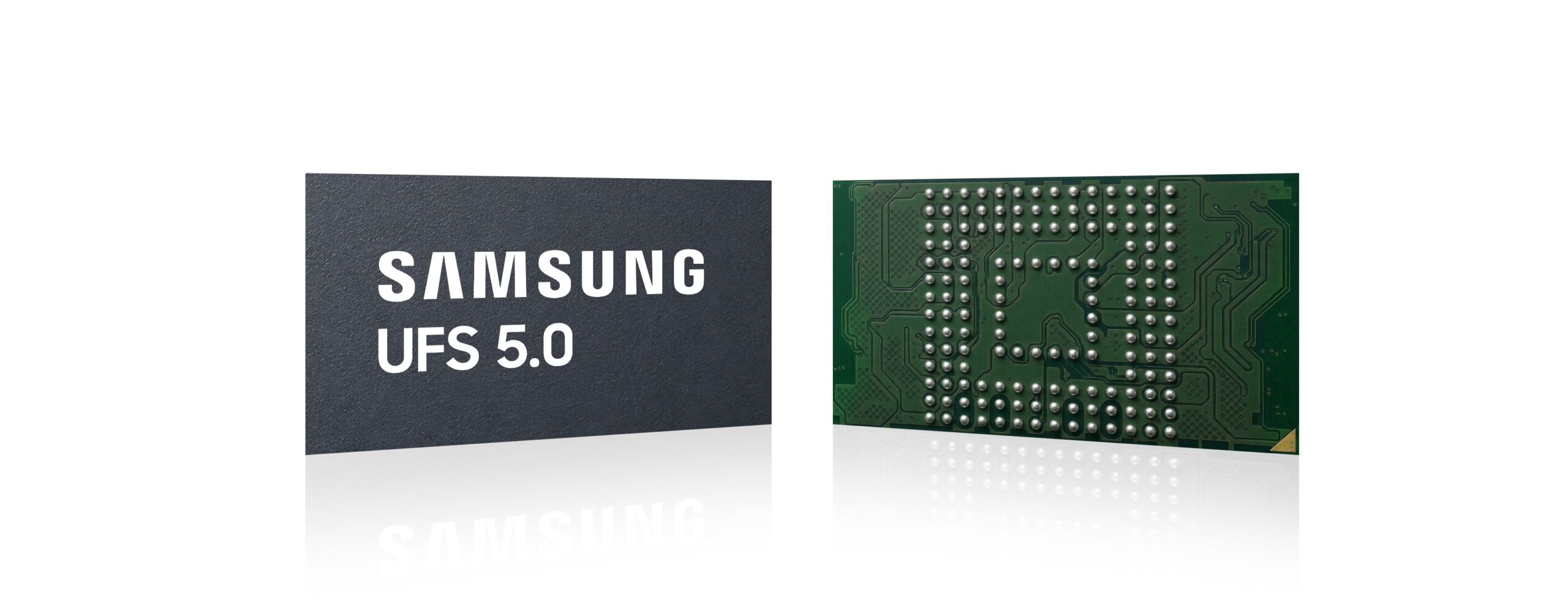
Samsung has just unveiled its next-generation mobile storage standard, UFS 5.0, as first reported by PCMag, and the numbers are eye-opening: up to 10.8 GB/s read speeds and 9.5 GB/s write speeds — more than double the previous generation. But the more interesting story isn’t the speed record itself. It’s why Samsung built it this fast, and what that tells us about where computing is heading for schools and small businesses alike.
Just how fast are SSDs getting?
Storage speed has been on a steep upward curve for years. A typical hard drive tops out around 150–200 MB/s. The first consumer SSDs pushed that into the 500 MB/s range. Modern NVMe SSDs in laptops and desktops can hit 5,000–7,000 MB/s. Samsung’s new UFS 5.0 — designed for phones, tablets, and compact devices rather than full-size computers — now reaches 10,800 MB/s, putting mobile storage on par with (or ahead of) many desktop drives from just a couple of years ago.
In short: the gap between “phone storage” and “computer storage” is closing fast.
What actually is UFS, and what’s new in version 5.0?
UFS stands for Universal Flash Storage — it’s the industry standard for storage chips in phones, tablets, and other compact, battery-powered devices. Think of it as the mobile-world equivalent of the SSD in your laptop. Each new version (UFS 3.0, 4.0, 4.1, and now 5.0) brings faster speeds and better efficiency, set by an industry body called JEDEC so that manufacturers and chipmakers can build compatible parts.
UFS 5.0 brings three headline upgrades:
- Speed: More than double the previous UFS 4.1 generation, in both read and write speeds.
- Power efficiency: Over 40% more efficient, achieved through tricks like clock gating and multi-voltage control — meaning faster performance without draining the battery faster.
- Size: The chip package is about 17% smaller than before, freeing up room for batteries or other components in compact devices.
Samsung says mass production is expected to begin in late 2026, with capacities up to 1TB, and some early Snapdragon chipsets already confirmed to support it.
Why this is built specifically for AI
This is the real headline. Samsung has been explicit that UFS 5.0 exists because of on-device AI — running AI models directly on a phone or device, rather than sending every request to the cloud.
AI models need to pull large amounts of data — model weights, cached context, user data — in and out of storage very quickly. If storage is slow, the AI model stalls waiting for data, no matter how fast the processor is. Faster storage means:
- Lower latency when an AI assistant responds
- The ability to run larger, more capable models locally
- Less reliance on a constant cloud connection
It’s the storage equivalent of widening a highway so more traffic can move at once — the processor was never the only bottleneck.
How does this stack up against the storage in your device?
It’s worth putting UFS in context against the NVMe SSDs most of your fleet already runs:
- Speed: UFS 5.0’s 10.8 GB/s actually beats most current mainstream NVMe drives (PCIe 4.0 tops out around 8 GB/s). It only falls behind the newest top-tier PCIe 5.0 drives, which can hit 14–16 GB/s. So it’s less “UFS vs. NVMe” and more “which generation of NVMe are we talking about.”
- Power: This is UFS’s real strength. It draws significantly less power than a desktop or laptop NVMe drive under load — which is exactly why phones and ultra-thin laptops use it instead.
- Cost: UFS tends to come in cheaper than premium NVMe drives, though it’s not a perfect like-for-like comparison — it isn’t sold as a standalone consumer product the way SSDs are, and it currently tops out around 1TB per chip versus the multi-terabyte capacities available in SSDs.
- Upgradability: UFS is soldered directly to the device’s board — it’s a “buy it built in” technology, not something you can retrofit into existing laptops or desktops down the track.
- Best fit: It’s especially well-suited to phones, tablets, and the new wave of slim ARM-based laptops, where battery life and compact size matter more than raw maximum throughput.
Is this something worth considering from us?
This is mobile-device storage, so it won’t show up as something you “buy” directly — it’ll filter through in the next generation of phones, tablets, and AI-capable devices your staff and students use. But the underlying trend is genuinely worth paying attention to, especially with how much data you’re processing and the appeal of cutting cloud costs. A few questions worth asking as you plan:
- How much of our data processing is genuinely latency-sensitive? If staff or systems are waiting on cloud round-trips for things like document searches, transcription, or basic AI assistance, faster local storage and on-device processing could meaningfully speed things up.
- What’s our actual cloud/bandwidth spend tied to? If a chunk of your costs come from constantly shuttling data to and from cloud AI services, shifting some of that workload to local, on-device processing could reduce both bandwidth use and the ongoing subscription/API costs.
- Do we have data sensitivity reasons to prefer local processing? For schools especially, student data privacy is a real consideration — processing more on-device (rather than sending it to third-party cloud services) can simplify compliance.
- What’s our hardware refresh cycle? If you’re due for a device refresh in the next 12–18 months, it’s worth keeping an eye on which models ship with these faster storage standards and stronger on-device AI capability, since that’s where the real-world benefit will land — not in the spec sheet, but in everyday responsiveness.
The short version: you don’t need to act on UFS 5.0 today. But it’s a useful signal that the industry is betting heavily on local, on-device AI processing — and that’s a trend worth factoring into your next round of device or infrastructure decisions, particularly if data volumes and cloud costs keep climbing.
Not sure if your current fleet is keeping up?
If reading this has you wondering whether your devices — across one department or the whole organisation — are still up to the job as data and AI demands grow, that’s exactly the kind of conversation we’re happy to have. Contact us for a chat about your current setup and where your needs are heading.
Source: Samsung UFS 5.0 is gunning for SSDs with 10.8 GB/s sustained read — PCMag