~4 min read
Schools are in a challenging spot right now, and the pressure is coming from several directions at once.
Students are using AI heavily, and too often it replaces the learning process instead of supporting it. At the same time, these young people will be expected to use AI confidently in their careers. Teachers tell us they want to keep human-led teaching at the centre of the classroom, and there is strong agreement that it should stay there.
On top of that, 2027 looks like a turning point. Several education sectors are introducing guidelines or limits on screen use for different age groups. The intent is good. There is no doubt that too much screen time, and too much exposure to information, is not healthy for anyone, especially younger people. But in our conversations with teachers, we hear that it is one more thing for them to manage, on top of everything else they already carry. We think some of these approaches risk going too far, too fast.
Boredom is not the enemy
One thing we feel strongly about: being bored, and having to think your way out of it, is critical for learning. It is how brains develop the habits of focus, curiosity and problem-solving. When the answer is always one prompt away, that muscle doesn’t get used.
We are already seeing the effects. More young people go straight to AI for a solution without engaging their own critical thinking. Many are also missing genuine human communication skills, particularly for the harder conversations that every workplace eventually demands.
The concern is shared globally. The World Economic Forum’s Education 4.0 initiative is asking how education needs to be redesigned so that AI enhances human thinking rather than eroding it.
What are we actually trying to build?
We don’t want a generation that is “dumb and lacks communication skills”. We want future leaders who work hard and smart. They communicate professionally (yes, including emails), work well in teams, and contribute to the success of the organisations they join and to our broader economy.
The good news is that this is exactly what employers say they want. A recent World Economic Forum article on skills employers want from young people in the AI age points to learning agility, emotional intelligence, resilience and the human qualities AI can’t replicate. It also notes that more than one in three young workers are in occupations with medium to high exposure to AI-driven change. The message is clear: the skills that set people apart are the very ones that can’t be outsourced to a chatbot.
So what is technology’s role?
Technology has a real part to play, but it needs to be deliberate. In our view, schools should focus on three things.
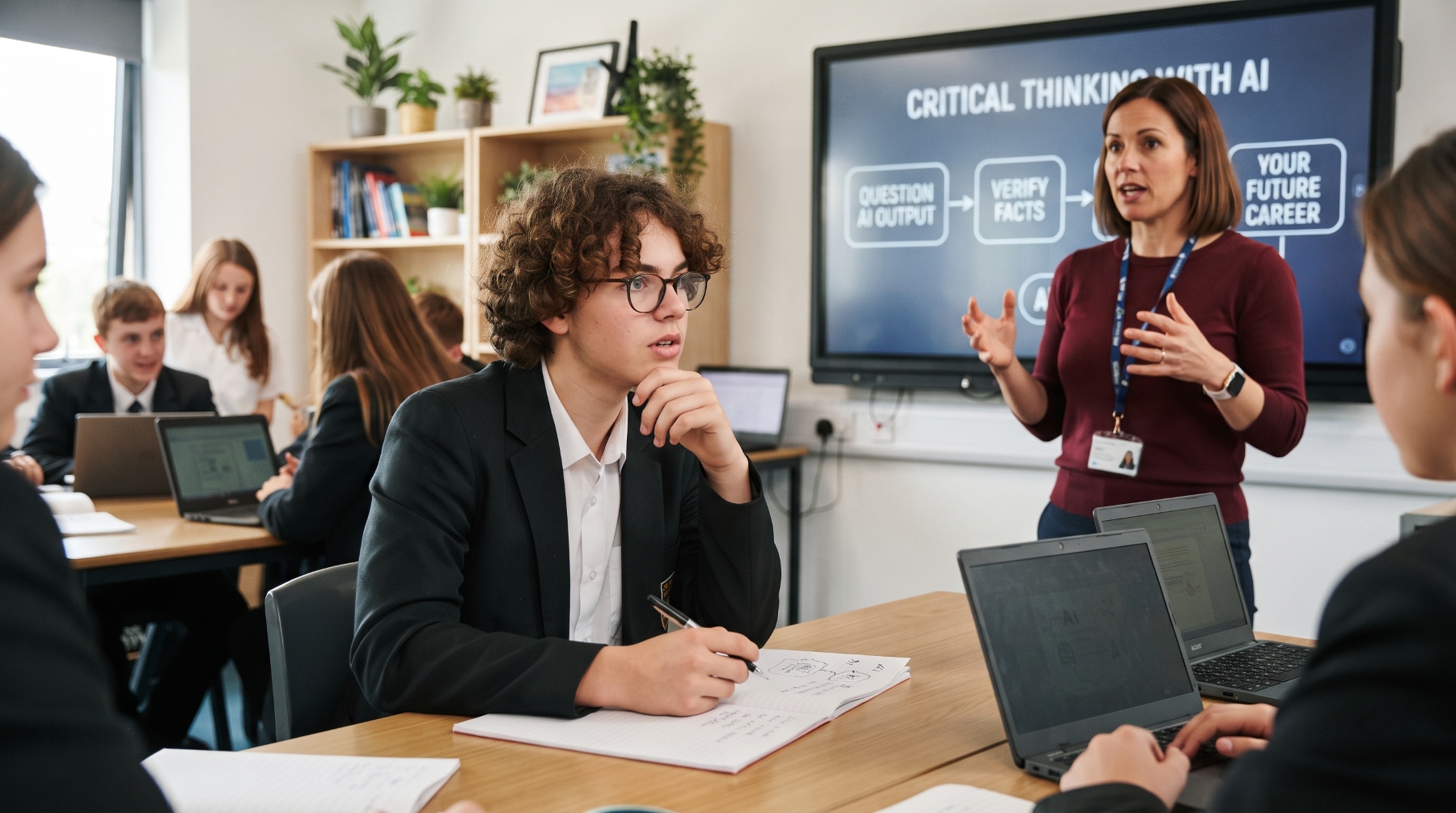
- Teach critical AI skills: Students need to learn how to question, verify and apply AI output, not just accept it. Using AI well is a skill in itself, and it starts with thinking for yourself.
- Provide access to AI tools, backed by a solid policy: Access matters, but so do confidentiality and data governance. Schools should restrict use to approved tools where data does not leave the school’s data domain and is stored in Australia only. A clear AI policy protects students, staff and the school.
- Invest in teachers: Encourage staff to attend professional development on working in the AI era, or run it in-house. Teachers can’t guide students through something they haven’t had the chance to explore themselves.
Finding the balance
None of this is about choosing between “AI everywhere” and “AI nowhere”. It is about teaching young people to use powerful tools with good judgement, while protecting the thinking time, human connection and communication skills that no technology can replace.
Let’s talk
At 8T8 Technologies, we’re not just a provider who supplies resources to your IT team or maintains your infrastructure. We speak and breathe education. We work in partnership with your organisation to ultimately support the best learning outcomes for your students.
That means having conversations like this one, offering IT insights and recommendations, and building strategies that are effective and actually get adopted by your staff and students.
https://initiatives.weforum.org/reskilling-revolution/education-4-0